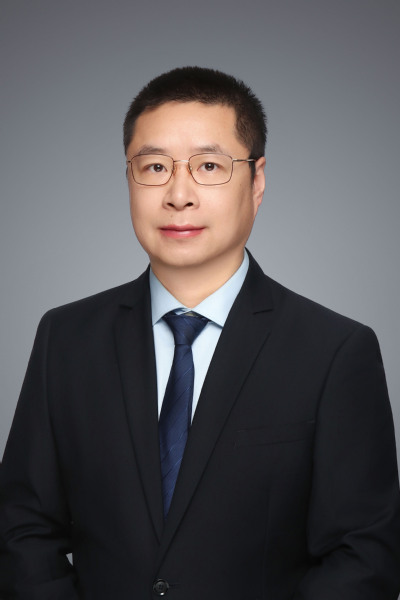
博士布鲁塞尔自由大学,生命科学工程(2006.09-2010.06)
学士、硕士哈尔滨医科大学,临床医学(七年制)(1998.09-2005.07)
复旦大学药学院,上海市肿瘤治疗新靶点发现与抗体药物重点实验室(筹)主任(2025.08-今)
复旦大学生物医学研究院,研究员(2019.08-2025.07)
上海交通大学医学院,副研究员、研究员(2012.01--2019.07)
比利时弗兰德斯生物技术研究所(VIB) 博士后(2010.07-2011.12)
同济大学附属第十人民医院普外科,住院医师、主治医师(2005.08-2006.08)
1.原创抗肿瘤靶标CTA6抗体偶联药物的临床前研究(82441037),国家自然科学基金委员会,专项项目2025.01 至 2027.12,620万
2.基于免疫检查点蛋白降解机制的肿瘤免疫治疗药物先导化合物发现研究(82030104),国家自然科学基金委员会, 重点项目,2021-01至 2025-12, 297万
3.骨与软组织肿瘤关键信号通路和特异分子标志物的筛选鉴定及临床转化(2024ZD0525800)国家科技重大专项,课题负责人,2025-02至2029-01,237万
4.ITPRIPL1对肿瘤微环境中调节性T细胞的作用及机制研究(82473939),国家自然科学基金委员会, 面上项目2025-01 至 2028-12,48万
1. 复旦大学科技成果产业化案例 TOP10,复旦大学,2025
2. 国家科技创新领军人才,2022
3. 国家科技进步二等奖(第四完成人),2018
4. 国家青年拔尖人才项目,2016
5. 上海市卫生系统银蛇奖二等奖,上海市卫生健康委员会,2015
6. 仲英青年学者,唐仲英基金会,2015
7. 优秀青年科学基金,国家自然科学基金委员会,2013
8. 东方学者特聘教授,上海市教育委员会,2013
9. 上海市曙光计划,上海市教育委员会、上海市科学技术委员会,2012
10. 上海市浦江人才计划,上海市科学技术委员会,2012
11. 上海市青年科技启明星计划,上海市科学技术委员会,2006
课题组长期致力于转化医学研究,聚焦肿瘤治疗新靶点发掘及抗体类创新药物研发。在解析 CD3L1、SEMG1/2 等原创靶点的基础上,开展单抗、多抗及 ADC 候选药物研发;完成候选分子成药性评价、CMC 药学开发与非临床毒理学研究;负责创新药物临床方案设计,推动 IND 申报与临床研究推进,同步搭建伴随诊断方法与检测体系。致力于将肿瘤等重大慢性疾病领域的原创基础发现转化为first‑in‑class(同类首创)候选药物,为晚期末线肿瘤患者提供全新的免疫及靶向治疗机会。
研究结果以通讯或第一作者发表在Cell、Nature Biomedical Engineering, Nature Chemical Biology (2篇), Cell Reports Medicine,Cell Chemical Biology、JNCI、Cancer Res(2篇)、Gut、Nature Communications, Cell Reports、Oncogene等期刊,作为主编撰写Springer出版的英文专著《Regulation of Cancer Immune Checkpoints》。成果相关专利转让合同总额超2.28亿元,开发的原创靶点抗体候选药物获得中美临床试验许可,基于良好的安全性与有效性,已进入2期临床研究阶段。
1. 中国抗癌协会生物治疗专委会,委员
2. 中国医师协会临床精准医疗专委会,青年委员
1. 《Frontiers in Pharmacology》副主编(Associate Editor)
2. 《BMC Cancer》资深编委会成员(Senior Editorial Board Members)
1. Xu, J*. (2020).Regulation of Cancer Immune Checkpoints. Springer Nature.Hardcover book,ISBN:9811532656. Pages 1-653.(主编)
1. Deng S, Fang Y, Xue J, Wang R, Zhou X, Li C, Li N, Wang S, Zhang Y, Wang H, Yu J, Xu J. Targeting CD3L1-NRP2 disarms myeloid-driven tumor immune evasion. EMBO Mol Med. 2026 Jul;18(7):2635-2666.
2. Chi H, Deng S, Xu K, Zhang Y, Song T, Yu J, Wang Y, Liu J, Zhang Y, Shi J, Wang Y, Xu J. SEMA3G-NRP1 Signaling Functions as an Immune Checkpoint That Enables Tumor Immune Evasion by Impairing T-cell Cytotoxicity. Cancer Res. 2025 Mar 3;85(5):912-924.
3. Deng S, Zhang Y, Wang H, Liang W, Xie L, Li N, Fang Y, Wang Y, Liu J, Chi H, Sun Y, Ye R, Shan L, Shi J, Shen Z, Wang Y, Wang S, Brosseau JP, Wang F, Liu G, Quan Y,Xu J*, ITPRIPL1 binds CD3ε to impede T-cell activation and enable tumor immune evasion.Cell, 2024 Apr 5:S0092-8674(24)00310-6
4. Wang Y, Sun Y, Deng S, Liu J, Yu J, Chi H, Han X, Zhang Y, Shi J, Wang Y, Quan Y, Li H,Xu J*,Discovery of galectin-8 as an LILRB4 ligand driving M-MDSCs defines a class of antibodies to fight solid tumors.Cell Rep Med, 2024,5(1):101374
5. Deng S, Shi J, Sun Y, Quan Y, Shen Z, Wang Y, Li H, Xu J*, Development of a monoclonal antibody to ITPRIPL1 for immunohistochemical diagnosis of non-small cell lung cancers: accuracy and correlation with CD8 T cell infiltration. Front Cell Dev Biol2023, 11:1297211
6. Wang Y, Sun Y, Li H, Xu J*, Galectin-8 alters immune microenvironment and promotes tumor progression. Am J Cancer Res, 15 Jun 2023, 13(6):2517-2529
7. Li C, Chi H, Deng S, Xu K, Wang H, Yao H, Wang Y, Chen D, Guo X, Fang JY, He F,Xu J(*). THADA drives Golgi residency and upregulation of PD-L1 in cancer cells and provides promising target for immunotherapy.J Immunother Cancer. 2021 Aug;9(8):e002443.
8. Li C, Yao H, Wang H, Fang JY,Xu J*,Repurposing screen identifies Amlodipine as an inducer of PD-L1 degradation and antitumor immunity.Oncogene. 2021. 40, 1128–1146
9. Yao H, Li C, He F, Song T, Brosseau JP, Wang H, Lu H, Fang C, Shi H, Lan J, Fang JY, Xu J*. A peptidic inhibitor for PD-1 palmitoylation targets its expression and functions. RSC Chem Biol. 2020 Nov 3;2(1):192-205.
10. Wang H, Yao H, Li C, Shi H, Lan J, Li Z, Zhang Y, Liang L, Fang JY,Xu J*,HIP1R targets PD-L1 to lysosomal degradation to alter T cell-mediated cytotoxicity.Nat Chem Biol, 2019 (1): 42~50.
11. Ai L, Ren Y, Li Y, Chen H, Qian Y, Lu S, Xu A, Ren L, Zhao S, Chen Z, Chen YX, Xu J*, Fang JY. Synbindin deficiency inhibits colon carcinogenesis by attenuating Wnt cascade and balancing gut microbiome. Int J Cancer. 2019 Jul 1;145(1):206-220.
12. Yao H, Lan J, Li C, Shi H, Brosseau JP, Wang H, Lu H, Fang C, Zhang Y, Liang L, Zhou X, Wang C, Xue Y, Cui Y,Xu J*, Inhibiting PD-L1 palmitoylation enhances T-cell immune responses against tumours,Nat Biomed Eng,2019; 3(5):414.
13. Yao H, Wang H, Li C, Fang JY, Xu J*. Cancer Cell-Intrinsic PD-1 and Implications in Combinatorial Immunotherapy. Front Immunol. 2018 Jul 30;9:1774.
14. Liang L, Wang H, Shi H, Li Z, Yao H, Bu Z, Song N, Li C, Xiang D, Zhang Y, Wang J, Hu Y, Xu Q, Ma Y, Cheng Z, Wang Y, Zhao S, Qian J, Chen Y, Fang JY,Xu, J*,A Designed Peptide Targets Two Types of Modifications of p53 with Anti-cancer Activity,Cell Chem Biol, 2018, 25(6): 761~774
15. Wang Y, Wang H, Yao H, Li C, Fang JY, Xu J*. Regulation of PD-L1: Emerging Routes for Targeting Tumor Immune Evasion. Front Pharmacol. 2018 May 22;9:536.
16. PD-L2 expression in colorectal cancer: Independent prognostic effect and targetability by deglycosylation. Wang H, Yao H, Li C, Liang L, Zhang Y, Shi H, Zhou C, Chen Y, Fang JY, Xu J.*. Oncoimmunology. 2017 May 16;6(7):e1327494.
17. Qian J, Li Y, Yao H, Tian H, Wang H, Ai L, Xie Y, Bao Y, Liang L, Hu Y, Zhang Y, Wang J, Li C, Tang J, Chen Y, Xu J*, Fang JY*. ASAP3 regulates microvilli structure in parietal cells and presents intervention target for gastric acidity. Signal Transduct Target Ther. 2017 Feb 24;2:17003
18. Wang HB, Yao H, Li CS, Liang LX, Zhang Y, Chen YX, Fang JY, Xu J*. Rise of PD-L1 expression during metastasis of colorectal cancer: Implications for immunotherapy. J Dig Dis. 2017 Oct;18(10):574-581.
19. Tian H, Qian J, Ai L, Li Y, Su W, Kong XM, Xu J*, Fang JY*. Upregulation of ASAP3 contributes to colorectal carcinogenesis and indicates poor survival outcome. Cancer Sci. 2017 Aug;108(8):1544-1555.
20. Li C, Wang H, Yao H, Fang JY, Xu J*. Scaffold Proteins in Gastrointestinal Tumors as a Shortcut to Oncoprotein Activation. Gastrointest Tumors. 2017 Sep;4(1-2):1-10
21. Wang H, Liang L, Fang JY, Xu J*, Somatic gene copy number alterations in colorectal cancer: new quest for cancer drivers and biomarkers. Oncogene. 2016; 35(16):2011-2019.
22. Liang L,FangJY, XuJ*, Gastric cancer and gene copy number variation: emerging cancer drivers for targeted therapyOncogene.2016; 35(12):1475–1482
23. Qian J, Kong X, Deng N, Tan P, Chen H, Wang J, Li Z, Hu Y, Zou W, Xu J*, Fang JY*. OCT1 is a determinant of synbindin-related ERK signalling with independent prognostic significance in gastric cancer. Gut. 2015 Jan;64(1):37-48.
24. Hu Y, Wang J, Qian J, Kong X, Tang J, Wang Y, Chen H, Hong J, Zou W, Chen Y, Xu J*, Fang JY*. Long noncoding RNA GAPLINC regulates CD44-dependent cell invasiveness and associates with poor prognosis of gastric cancer. Cancer Res. 2014 Dec 1;74(23):6890-902.
25. Wang J, Qian J, Hu Y, Kong X, Chen H, Shi Q, Jiang L, Wu C, Zou W, Chen Y, Xu J*, Fang JY*. ArhGAP30 promotes p53 acetylation and function in colorectal cancer. Nat Commun. 2014 Aug 26;5:4735
26. Kong X, Qian J, Chen LS, Wang YC, Wang JL, Chen H, Weng YR, Zhao SL, Hong J, Chen YX, Zou W, Xu J*, Fang JY*. Synbindin in extracellular signal-regulated protein kinase spatial regulation and gastric cancer aggressiveness. J Natl Cancer Inst. 2013 Nov 20;105(22):1738-49
27. Naus E, Derweduwe M, Lampi Y, Claeys A, Pauwels J, Langenberg T, Claes F, Xu J, Haemels V, Atak ZK, van der Kant R, Van Durme J, De Baets G, Ligon KL, Fiers M, Gevaert K, Aerts S, Rousseau F, Schymkowitz J, De Smet F. Reduced Levels of Misfolded and Aggregated Mutant p53 by Proteostatic Activation. Cells. 2023 Mar 21;12(6):960. doi: 10.3390/cells12060960.
28. Xu J, Reumers J, Couceiro JR, De Smet F, Gallardo R, Rudyak S, Cornelis A, Rozenski J, Zwolinska A, Marine JC, Lambrechts D, Suh YA, Rousseau F, Schymkowitz J. Gain of function of mutant p53 by coaggregation with multiple tumor suppressors. Nat Chem Biol. 2011 May;7(5):285-95